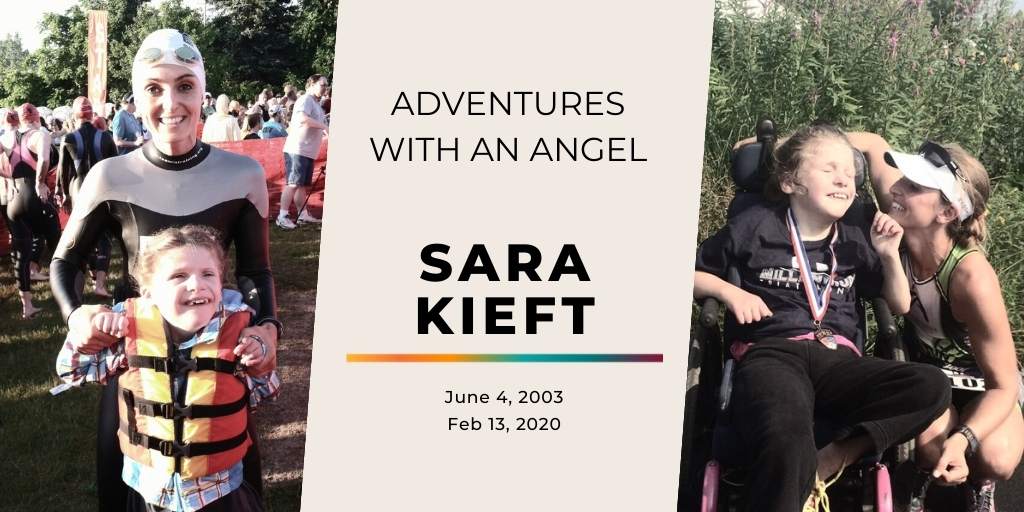
My Adventures with an Angel: Remembering Sara Kieft
January 24, 2024
Empowering Athletes through Menopause
March 21, 2024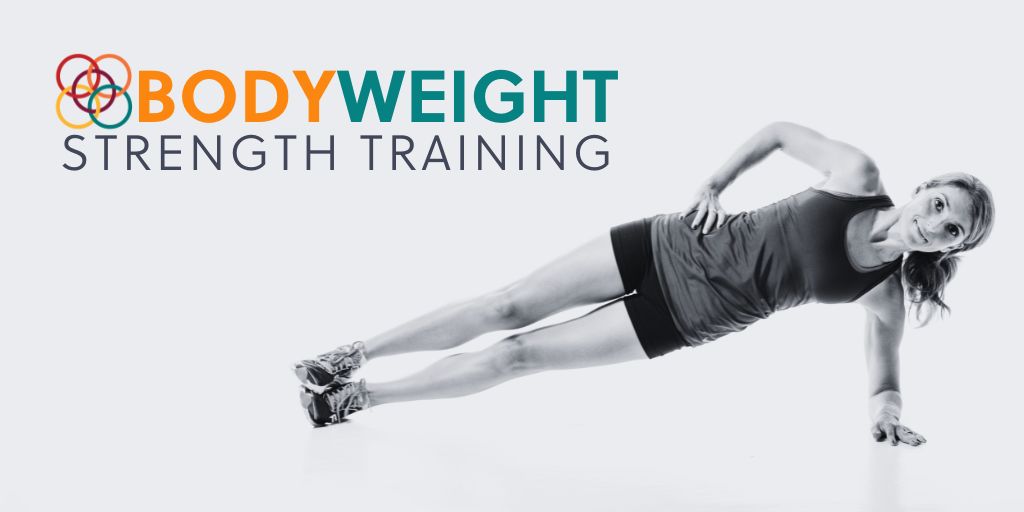
5 Essential Bodyweight Exercises
You’re a well-rounded athlete with a solid routine that includes quality nutrition, plenty of sleep, foam rolling, stretching, mobility work, adequate hydration, and strength training. Everything’s dialed in… until life happens. Suddenly the unexpected strikes: sick kid, deadline at work, car in the shop, traffic, a dog on the loose. Something has to give. And more often than not, strength training gets pushed aside, even though essential bodyweight exercises can keep you strong when life gets busy.
You don’t have to go to the gym, or even use weights to get in a quick strength training session. In fact, bodyweight exercises can also be highly effective in building muscle and functional strength. Moreover, multi-joint, compound exercises work many muscle groups with one move… and we like that efficiency!
Bodyweight exercises can be done with many progressions, regressions, and variations that further challenge you and add variety. Even so, these exercises are nothing new. In fact, they’re the absolute basics that most of us already know!
That said, here’s a few you can try today. The following essential bodyweight exercises provide the ideal mix for athletes to improve overall strength, increase power, and enhance joint stability.
Essential Bodyweight Exercises for Busy Athletes
1. PUSH-UP: The push-up builds the chest, shoulders and triceps and is a great stabilizer for the torso and lower back. Additionally, it’s an easy exercise to track progress with. Complete a 1-minute max rep test monthly to see how many repetitions you can complete in one minute. Track your progress. When adding push-ups to your body weight routine, be sure to use variations such as changing hand or foot position, adding a rotation or elevating the body.
2. SQUAT: There are so many benefits to the squat! They primarily build the quadriceps and the gluteus muscles, but also works to improve ankle, hip and stability through the thoracic spine (upper and middle back). Use variations to make a squat workout more effective, modifying both speed, depth and technique. Also consider using the squat as a conditioning tool by adding jump squats to your routine.
3 PULL-UP or BENT ROW: As a compliment to the push motion of the push-up, the pull-up or bent row utilizes a pull motion to build the muscles of the back. If you do not have access to a pull up bar, instead do a bent row with weights.
4. LUNGES OR SPLIT SQUAT: Similar to the squat, lunges and split squats primarily target the muscles of the leg and hip/glutes; quadriceps, hamstrings, gluteus maximus, adductor magnus (inner thigh), soleus and gastrocnemius (calves). The split squat and the lunge are slightly different though, and the major difference is the position of your rear leg. In a split squat, the rear leg is primarily at rest, and your front leg gets the brunt of the work. In a lunge, the rear leg is engaged and working equal to the front leg. The Bulgarian split squat is a great variation that elevates the back leg.
5. PLANK: Finally, the plank is a total-body strengthener with emphasis on the core. Contract your abs to prevent your behind from sticking up or sinking. Consider some great progressions for your plank; single leg, single arm, walk-ups, side planks and body saw planks.

Warm-up
I love a solid warm-up – grab my strength warm up protocol here. However, if you are strapped for time, start with some dynamic movement and then try this quick set to get the blood flowing.
5 rounds total, Start with 5 reps of each exercise. decrease the number of reps each round until you do one of each.
- seal jacks
- air squat
- inchworm + lunge rotation (also known as greatest stretch in the world)
Work-Out:
Perform each exercise for 1 minute, with 15 seconds of rest between. To make it easier, use an interval timer app or try this online version. Do as many repetitions as you can in that minute. It’s okay if it gets hard – just don’t let it get ugly! If it feels too easy, you can increase the intensity by slowing down, adding progression, a ballistic movement, or finding something heavy to hold on to!
- Single-Leg Romanian Deadlift (switch legs every 10 reps)
- Push-up + shoulder tap (knees are okay! or just do a plank with shoulder taps)
- Rear Foot Elevated Split Squat (switch legs every 10 reps)
- Pull-up or inverted row (you’ll need a pull-up bar, or you may have to get creative)
- Single-leg glute bridge (switch legs every 10 reps)
Each round takes about 6 minutes. Do 3-5 rounds. Make adjustments for your fitness level and time.
Cool Down:
You will set yourself up for a better workout, and faster recovery if you start and finish your session on the right foot. Cooling down is as simple as a few minutes of deep breathing with an active recovery movement like walking. It allows your heart rate and blood pressure to slowly recover, which can help lower cortisol, which is particularly important for women. Traditionally, we were taught that a cool down should include static stretching, but there is actually not evidence to support stretching post workout. Just breathe! Ahhhhh….
“Efficiency is doing things right, effectiveness is doing the right thing.” – Peter Drucker Test
REFERENCES
- Andersen J.L., and P. Aagaard. “Effects of Strength Training on Muscle Fiber Types and Size; Consequences for Athletes Training for High-Intensity Sport.” Scandinavian Journal of Medicine and Science in Sports. 20 (2): 32-38, 2010. doi:10.1111/j.1600-0838.2010.01196.x.
- DeWeese, B.H., Guy Hornsby, Meg Stone, and Michael H. Stone. “The Training Process: Planning for Strength-Power Training in Track and Field. Part 1: Theoretical Aspects.” Journal of Sport and Health Science. (4)4: 308-317, 2015. doi:10.1016/j.jshs.2015.07.003.
- Dousset E., J. Avela, M. Ishikawa, J. Kallio, S. Kuitunen, H. Kyrolainen, V. Linnamo, and P.V. Komi. “Bimodal Recovery Pattern in Human Skeletal Muscle Induced by Exhaustive Stretch-Shortening Cycle Exercise.” Medicine and Science in Sports and Exercise. 39(3):453-460, 2007.
- Van Hooren B, Peake JM. Do We Need a Cool-Down After Exercise? A Narrative Review of the Psychophysiological Effects and the Effects on Performance, Injuries and the Long-Term Adaptive Response. Sports Med. 2018 Jul;48(7):1575-1595. doi: 10.1007/s40279-018-0916-2. PMID: 29663142; PMCID: PMC5999142.